![Vladimir [RaleyApps]](https://storage.ghost.io/c/54/bc/54bce786-a3c0-4ea3-b0f4-96f64229d4ff/content/images/size/w150/2026/02/Vlad-9-1-1.jpg)
Every purchase request starts with a quiet moment that nobody logs. An engineer realizes the team needs another seat of a tool. Someone, somewhere, decides they need something. That front half of the procurement lifecycle is intake-to-procure, and in most companies it is held together with email, good intentions, and luck.
Intake-to-procure is a service-request and orchestration problem. The intake layer of procurement should live in JSM, and here is why.
What intake-to-procure actually is
Intake-to-procure is the gap between "I need to buy something" and "this is an approved, well-formed request ready to become a purchase order in your ERP." Everything that determines quality and control happens in that gap:
- Capturing the request in a structured way.
- Enriching it with the context procurement needs: cost centers, GL accounts, categories, budget, vendor, justification.
- Triaging and routing it to the right reviewers.
- Gathering approvals, often across several functions.
- Handing a clean, approved request off to the ERP system that executes the purchase and tracks invoicing, payments, and deliverables.
It is the front door of the process, separate from the financial execution (PO issuance, receiving, invoicing, payment) that an ERP or AP system owns.
Intake is about capturing the business need. Orchestration is about routing it to the right approvers.
Why intake breaks in most companies
Intake spreads across every channel an employee can find: an email to a manager, a Slack DM to finance, a half-filled form, a ticket raised in the wrong project. The symptoms are familiar to anyone who has worked in operations. These are the four we all fall for.
- No single front door.
Requesters do not know where to go, so they go wherever they can. Finance and procurement teams then spend their day chasing context instead of processing requests. - Garbage in, inconsistent information out.
Free-text requests arrive missing the business justification, the cost center, the GL account, the category. The first thing procurement does is bounce them back, and the clock resets. - Invisible routing.
Approvals happen inside private inboxes. Nobody can see where a request is, who is sitting on it, or how many days it has been stuck. Good luck with the auditors. - Maverick spend.
When the official path takes too long or hurts too much, people quietly route around it, and unvetted vendors and purchases slip through.
These are not the financial problem. They are intake, triage, routing, and visibility problems. The exact problem, Jira Service Management already solved well for IT and HR.
Leverage JSM for IT, HR or Procurement, it is perfect tool to solves these common mistakes
IT and HR service management ran into these same four problems years ago, and JSM was built to solve them. Here is how each piece maps onto procurement intake.
A single portal as the front door. JSM gives requesters one familiar place to ask for what they need, the same portal they already use for IT and HR. One front door is the highest-leverage fix for fragmented intake, full stop.
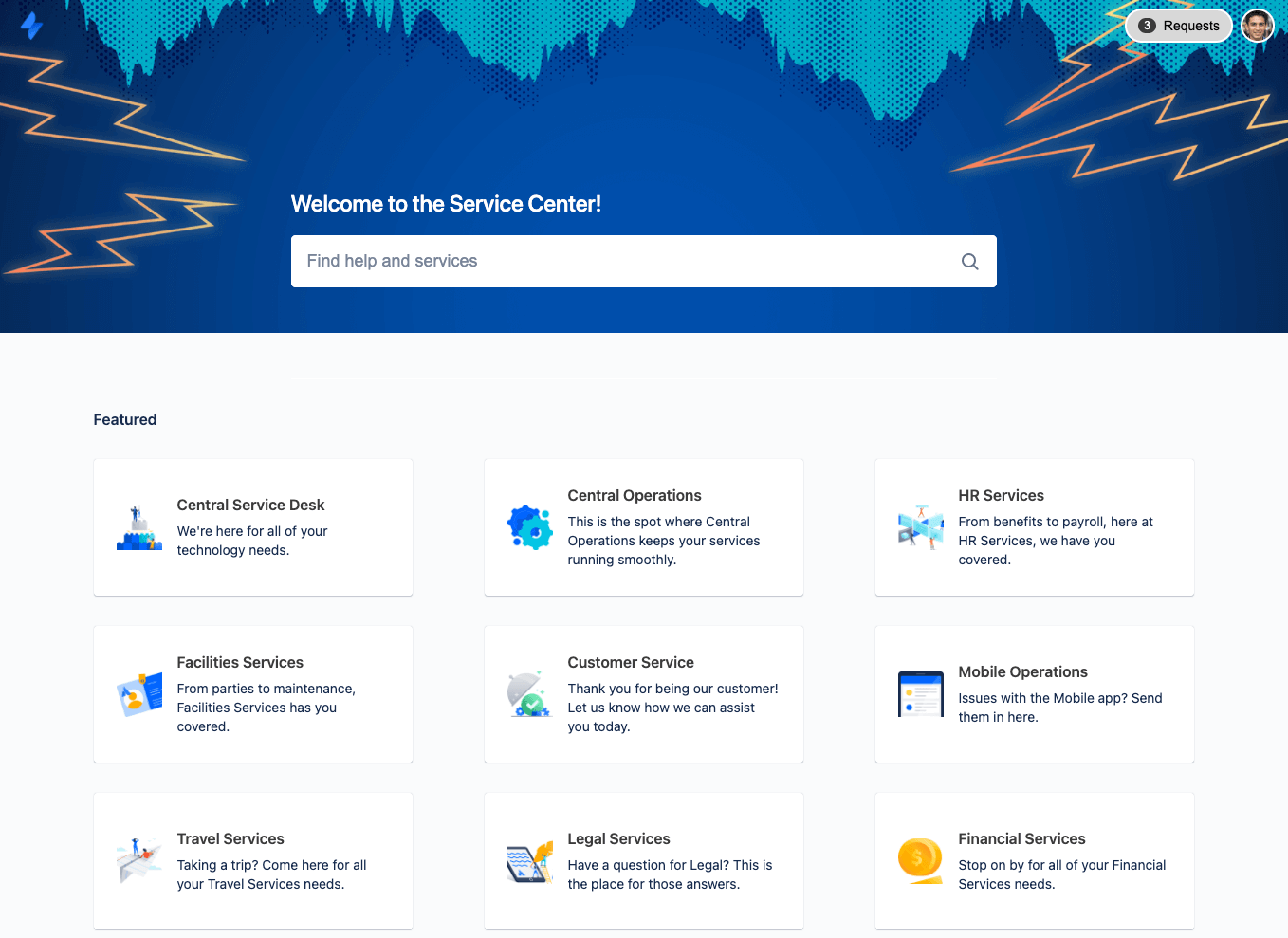
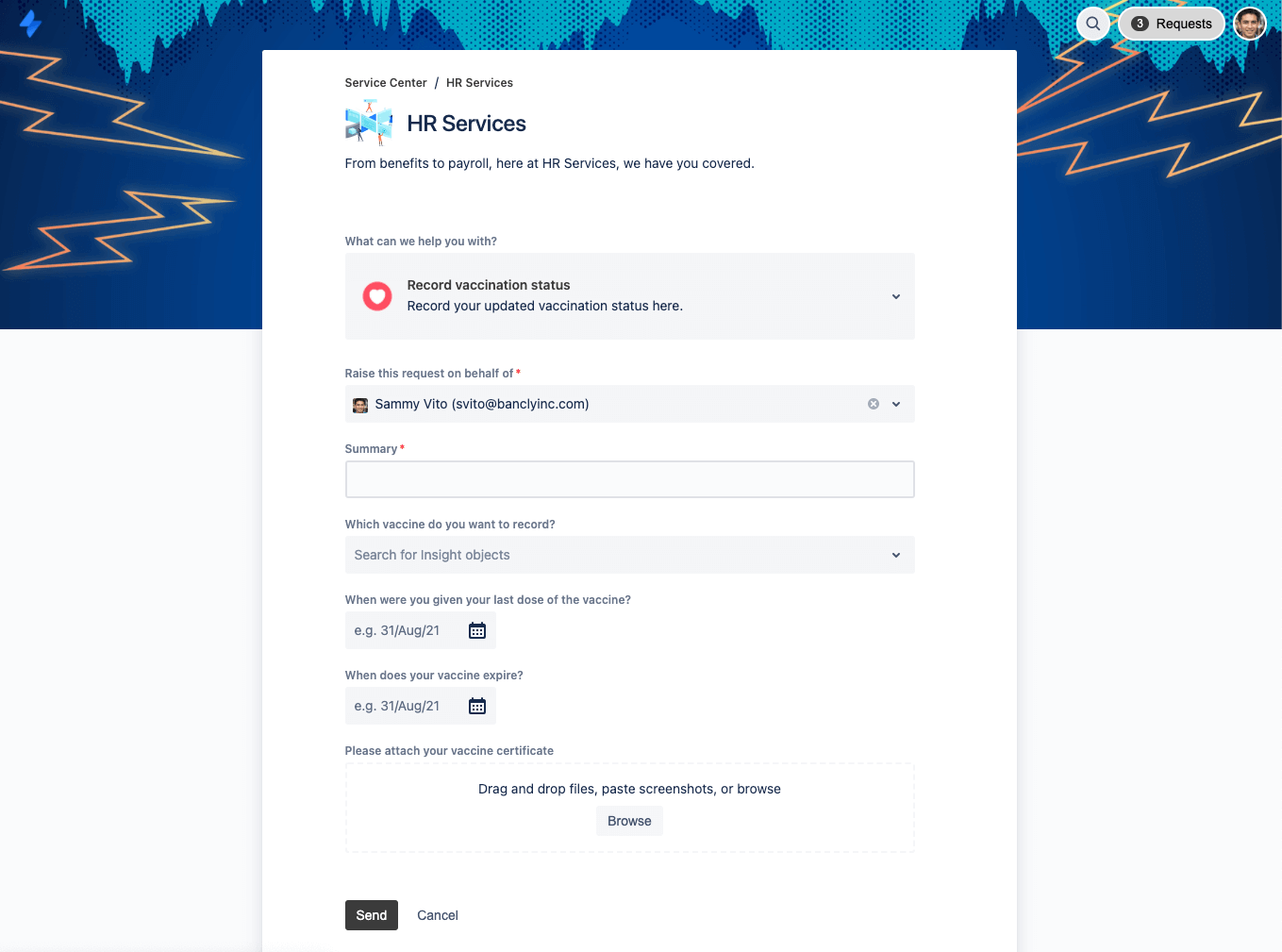
Structured, validatable request forms. Request types with conditional, validated fields enforce quality at the source, so requests arrive complete instead of getting bounced.
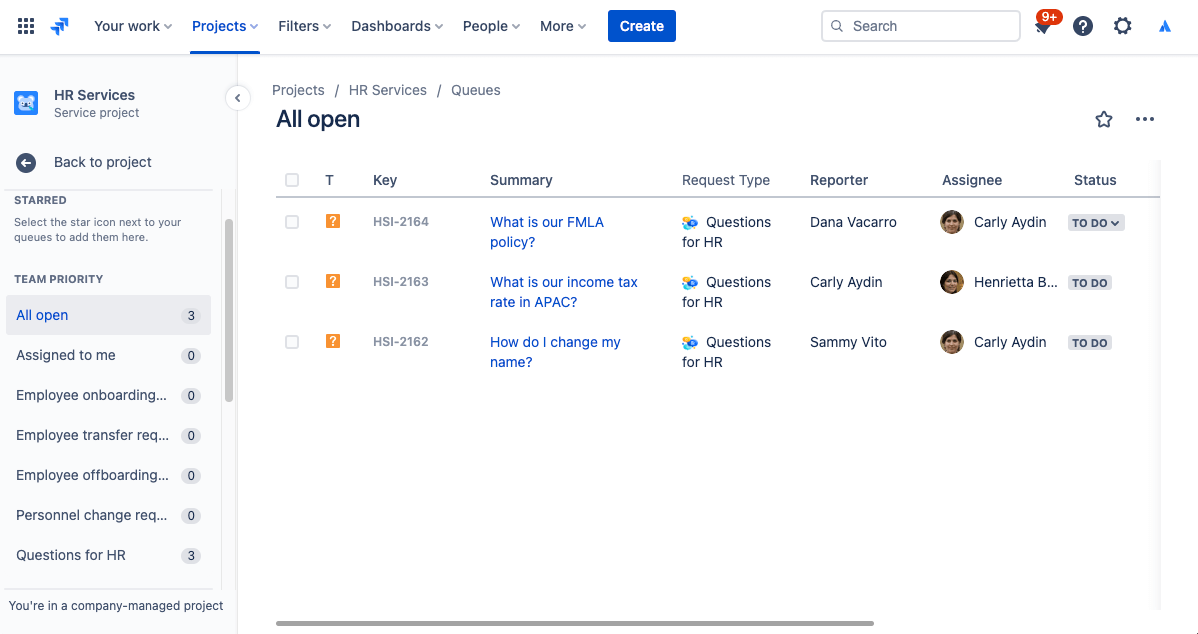
Triage, queues, and SLAs. JSM was built to receive a stream of requests, sort them, route them, and hold them to response times. That is exactly what an intake function needs, and exactly what email can never give you.
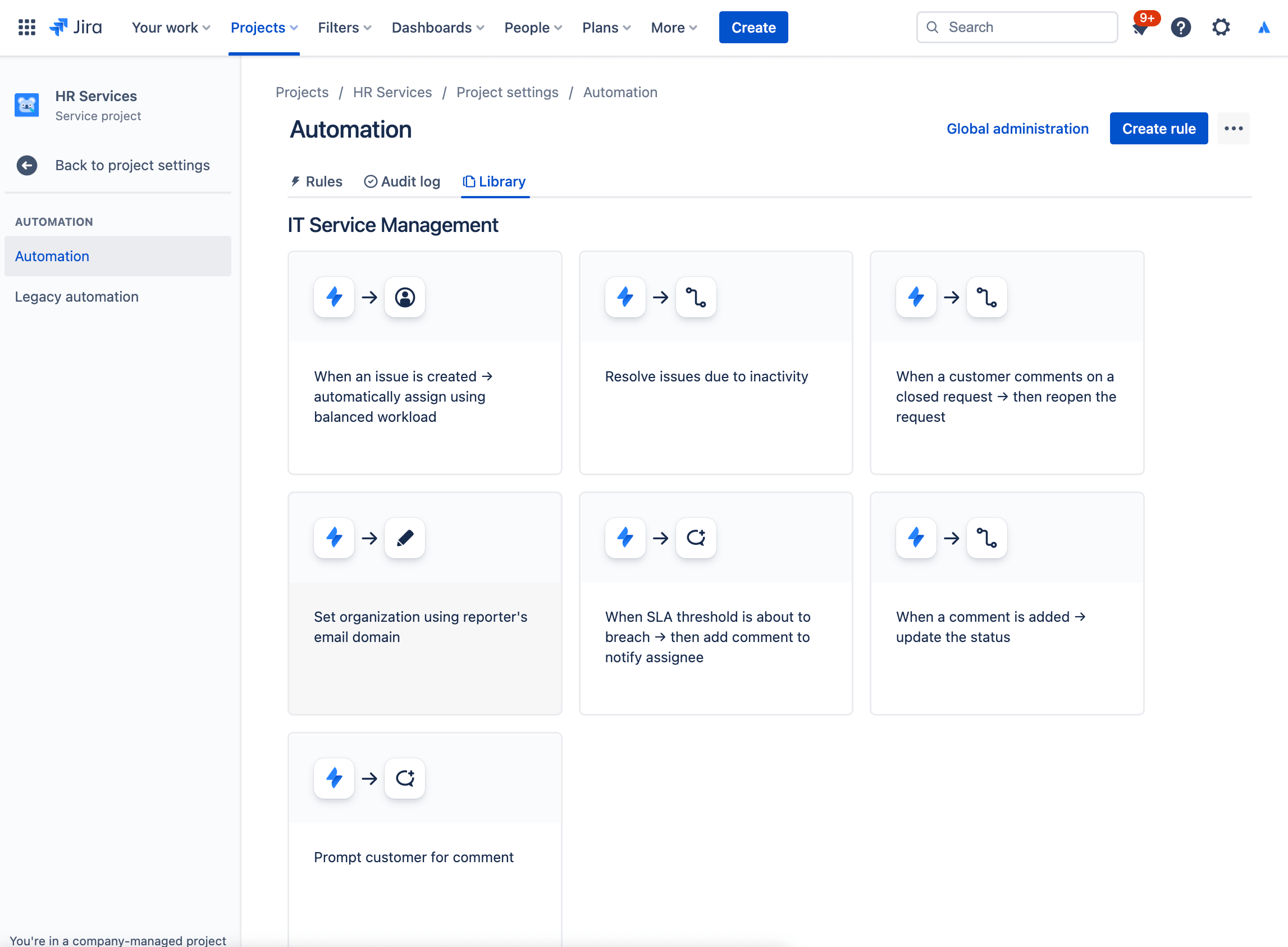
Workflow and automation. Jira's workflow engine and automation rules route requests, escalate the stalled ones, and move work through stages without a human shepherding every step.
Cross-functional approvals. Procurement intake almost always needs sign-off from more than one team: budget owner, finance, legal, security. JSM gathers those approvals inside one tracked request, in a defined order.
Visibility by default. Because every request is a ticket, status, ownership, and aging are visible to everyone. That is the transparency inbox-based approvals destroy.
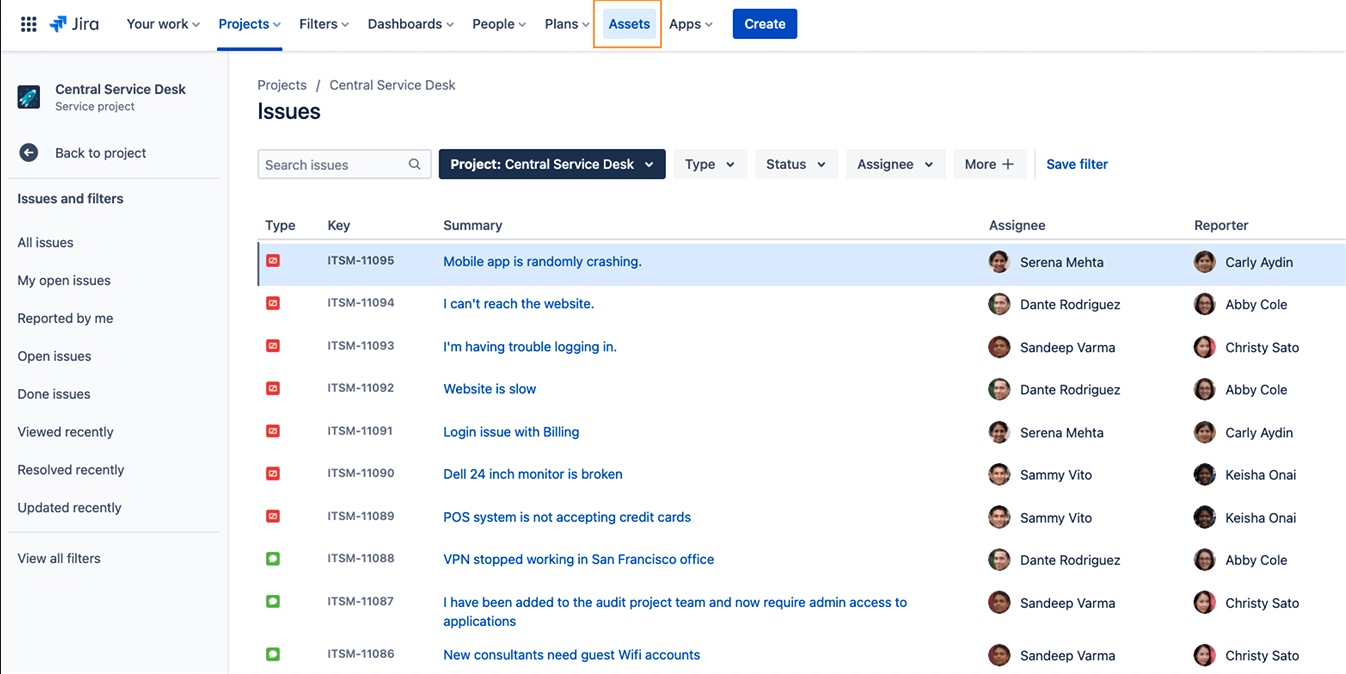
A data backbone in Assets/ERP. Vendors, budgets, departments, and products can live in JSM Assets or ERP and be referenced at intake, so requests are enriched against managed master data instead of typed in by hand.
Make intake-to-procure orchestration easier with Raley Procurement for JSM
A ready to use "Intake to Procure Orchestration template via JSM add-on app" without heavy setup and configuration that solves the same problem with proper procurement functions.
- One portal entry point for "I need to buy, I need a new vendor, I need a quote," so requesters never have to know which downstream process applies.
- Validation and enrichment at intake, pulling cost centers, budgets, and approved vendors from Assets/ERP so the request is well-formed before a human touches it.
- Distinct request types behind that door (purchase request, new vendor, price change, quote), each with a form tuned to collect exactly what that process needs.
- Automated triage and routing that sends each request down the right approval path based on amount, cost-center, category, and department.
- Ordered, cross-functional approvals with notifications that fire in sequence, plus visible status and SLAs the whole way through.
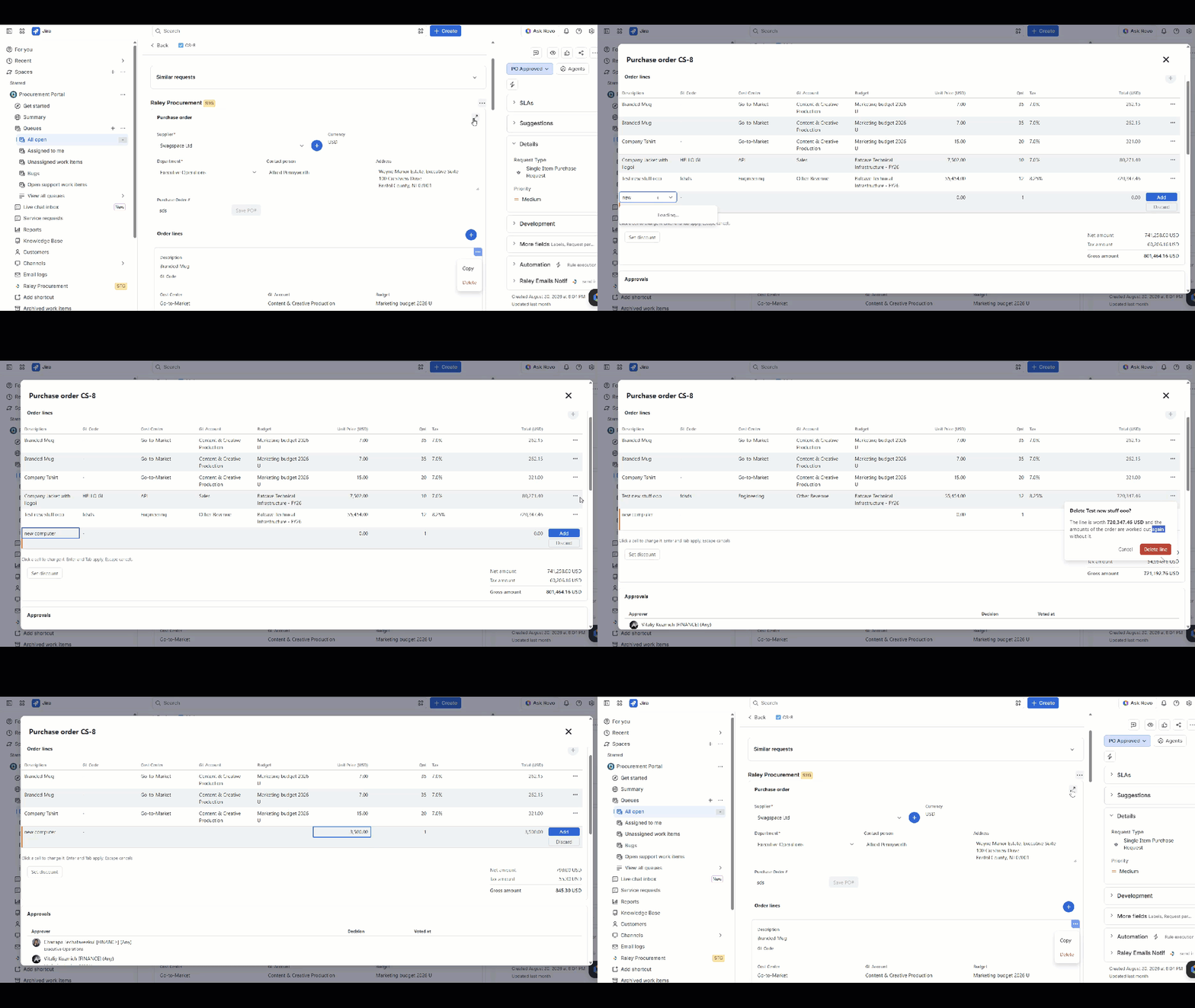
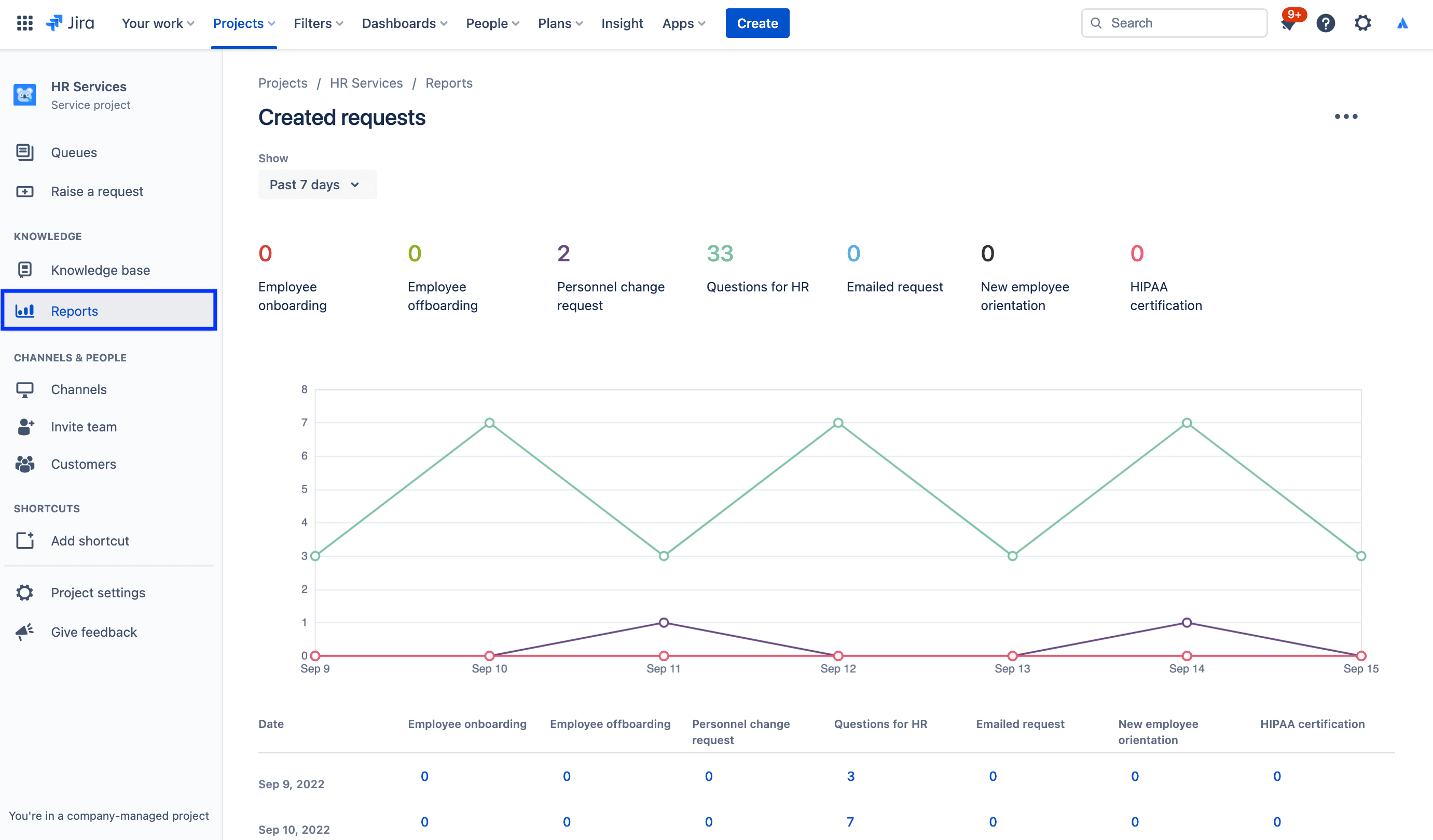
- Total Visibility on Budgeting, Cost Center, GL Account and Intake Status. Requesters get visibility on their requests status, the approver get notifications and able to see budget and Cost Center from year to year before making decision.
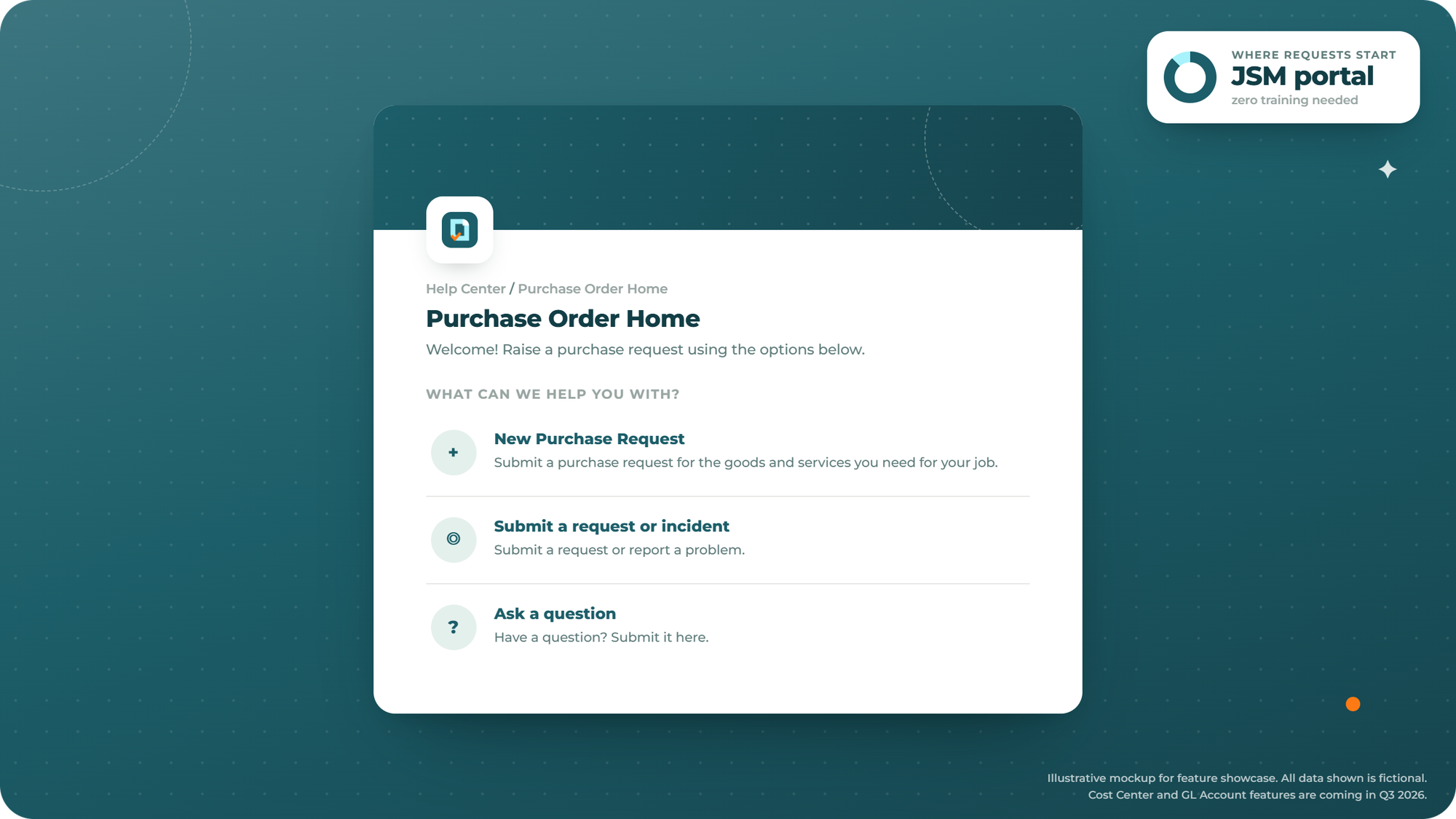
one portal entry point. (looks and feel can be customized)
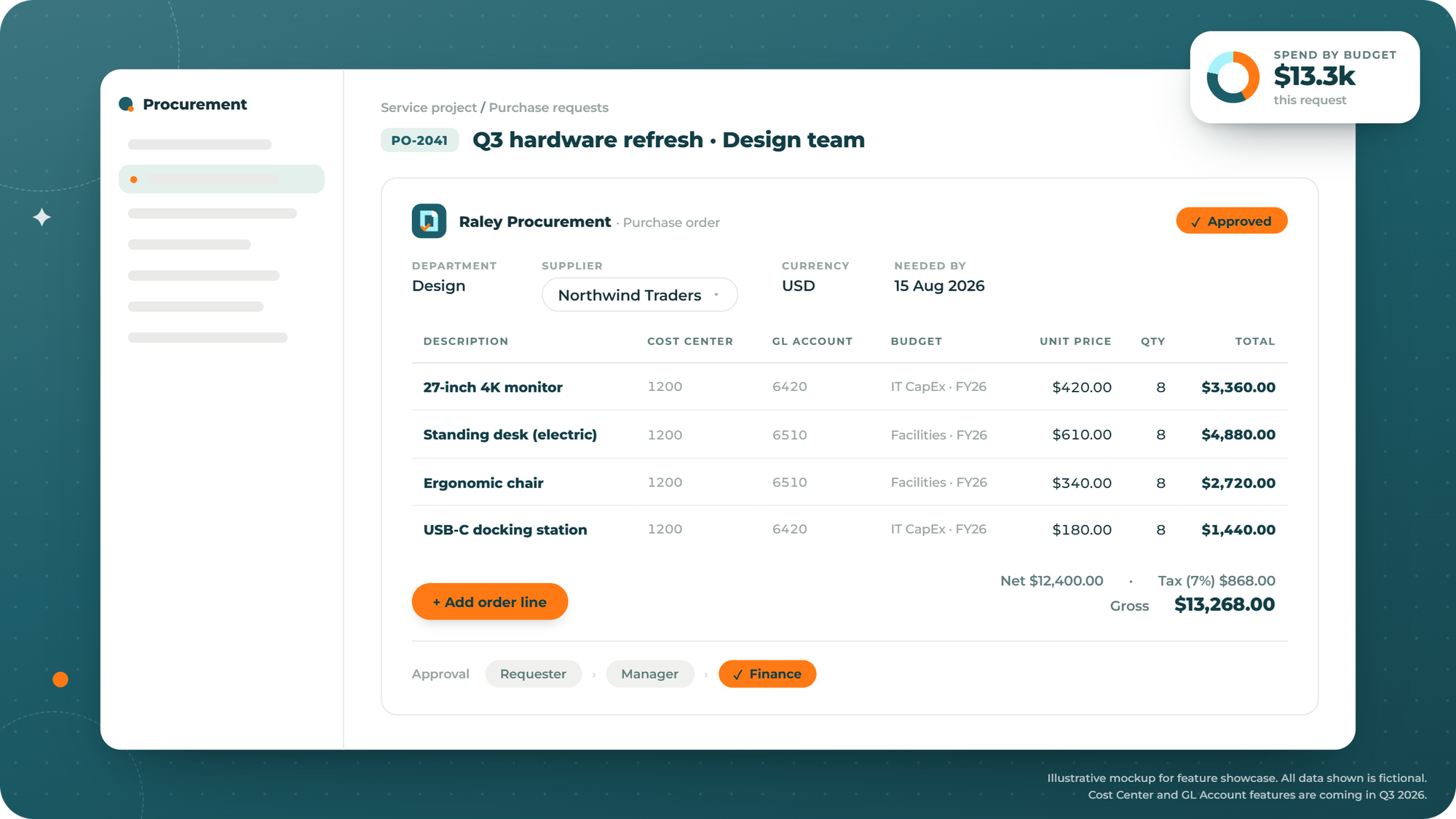
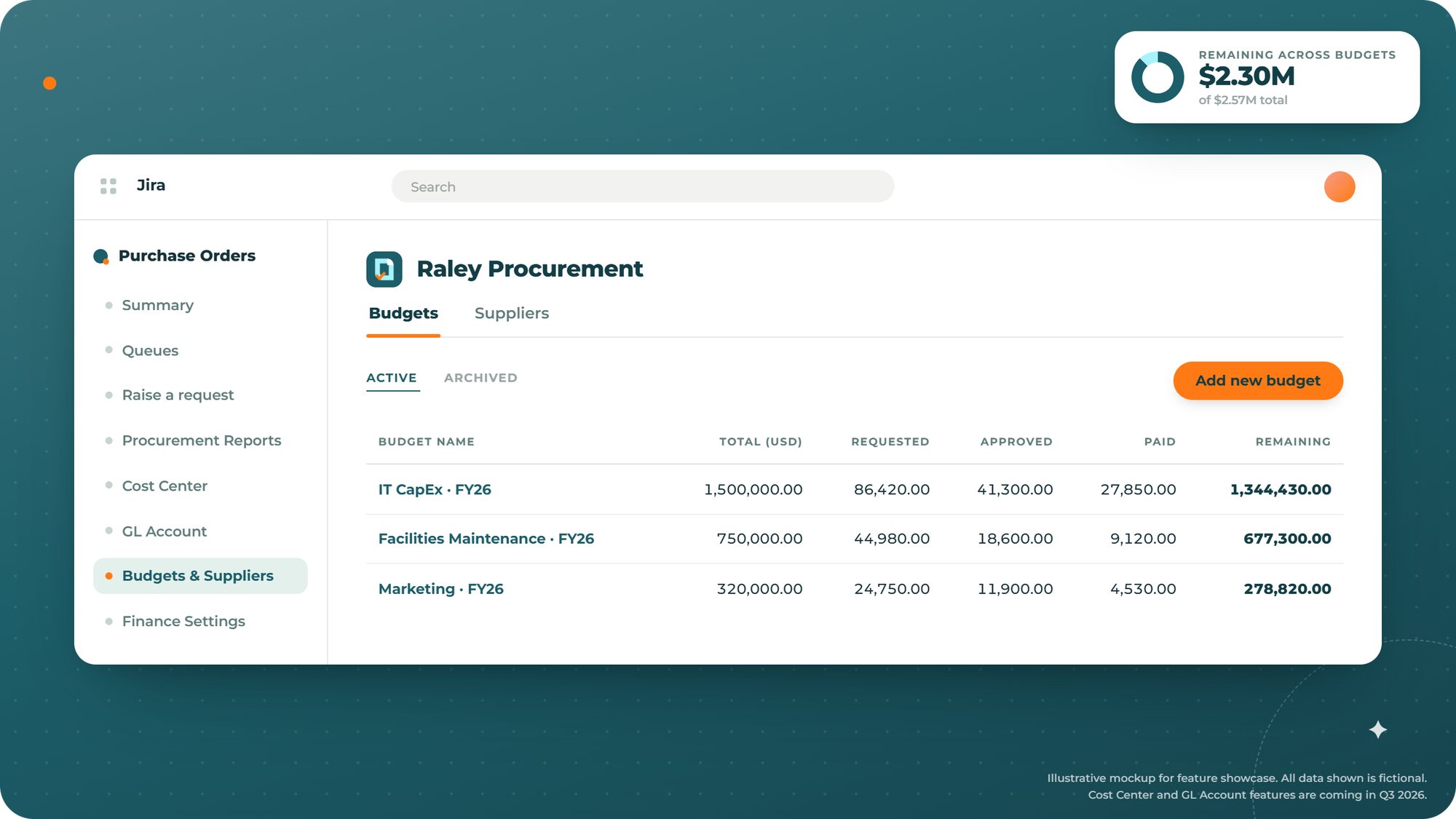
Preset Budgets, Cost Center, GL Accounts, with multiple approvers
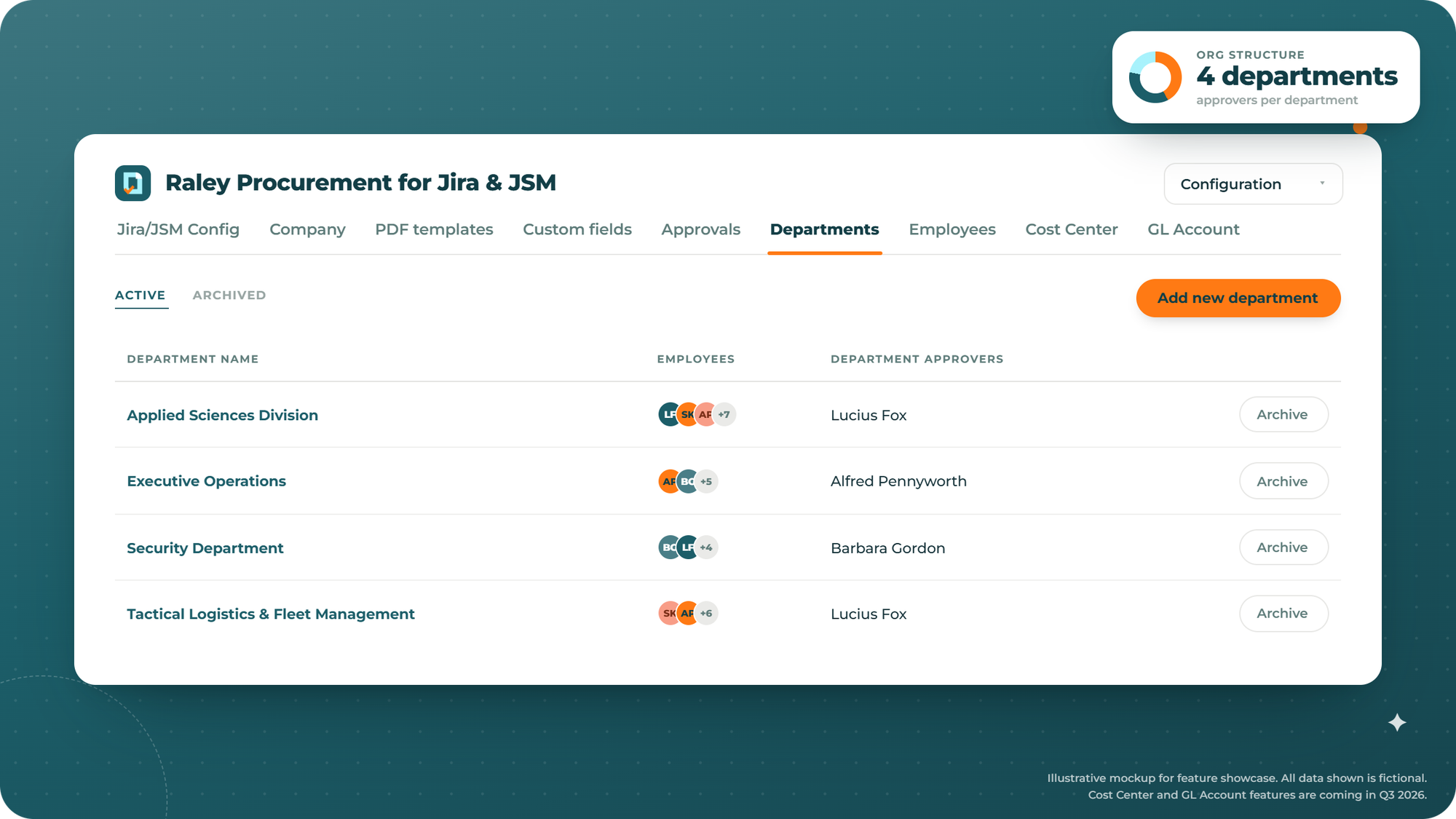
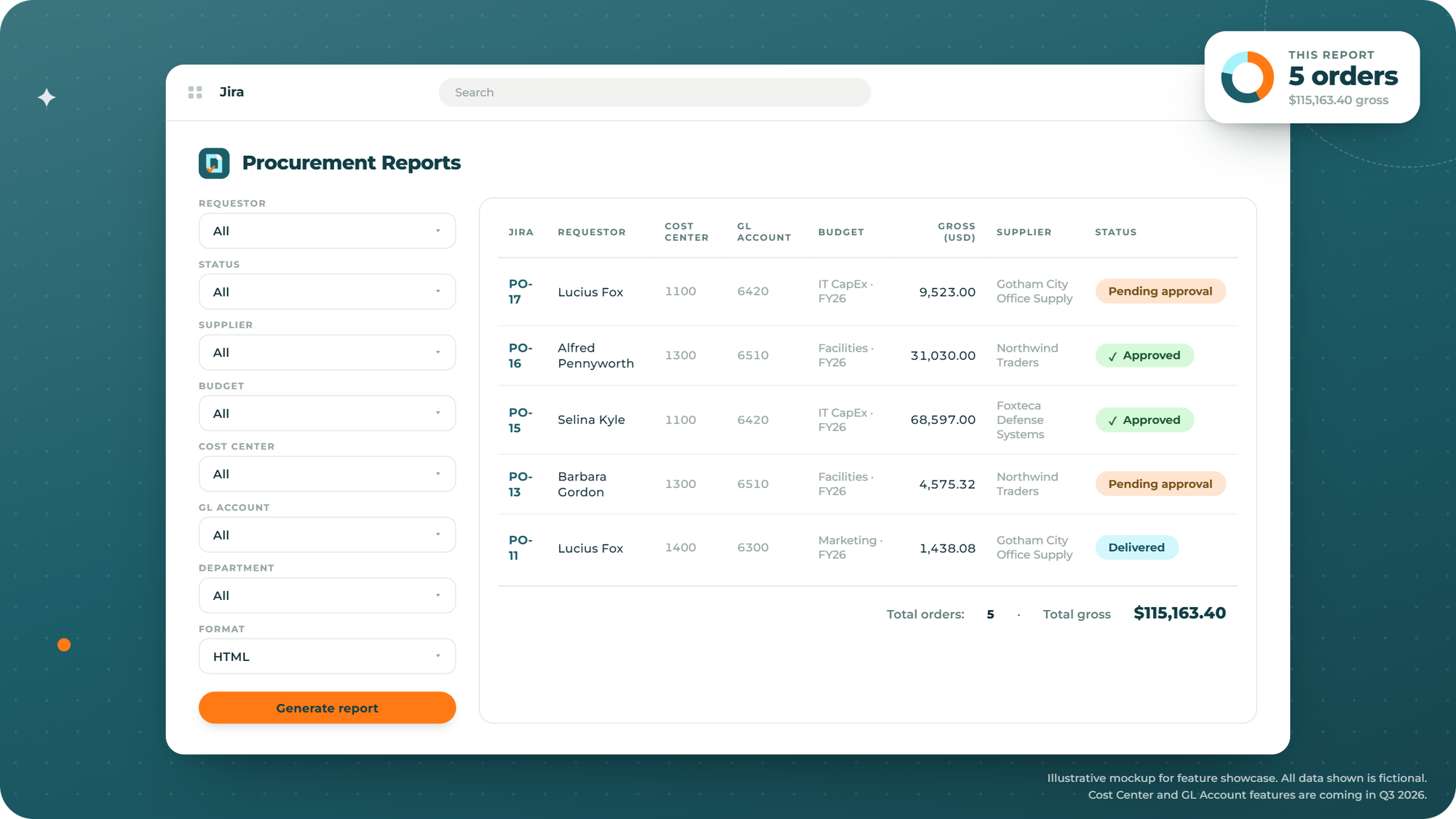
Configure reporting
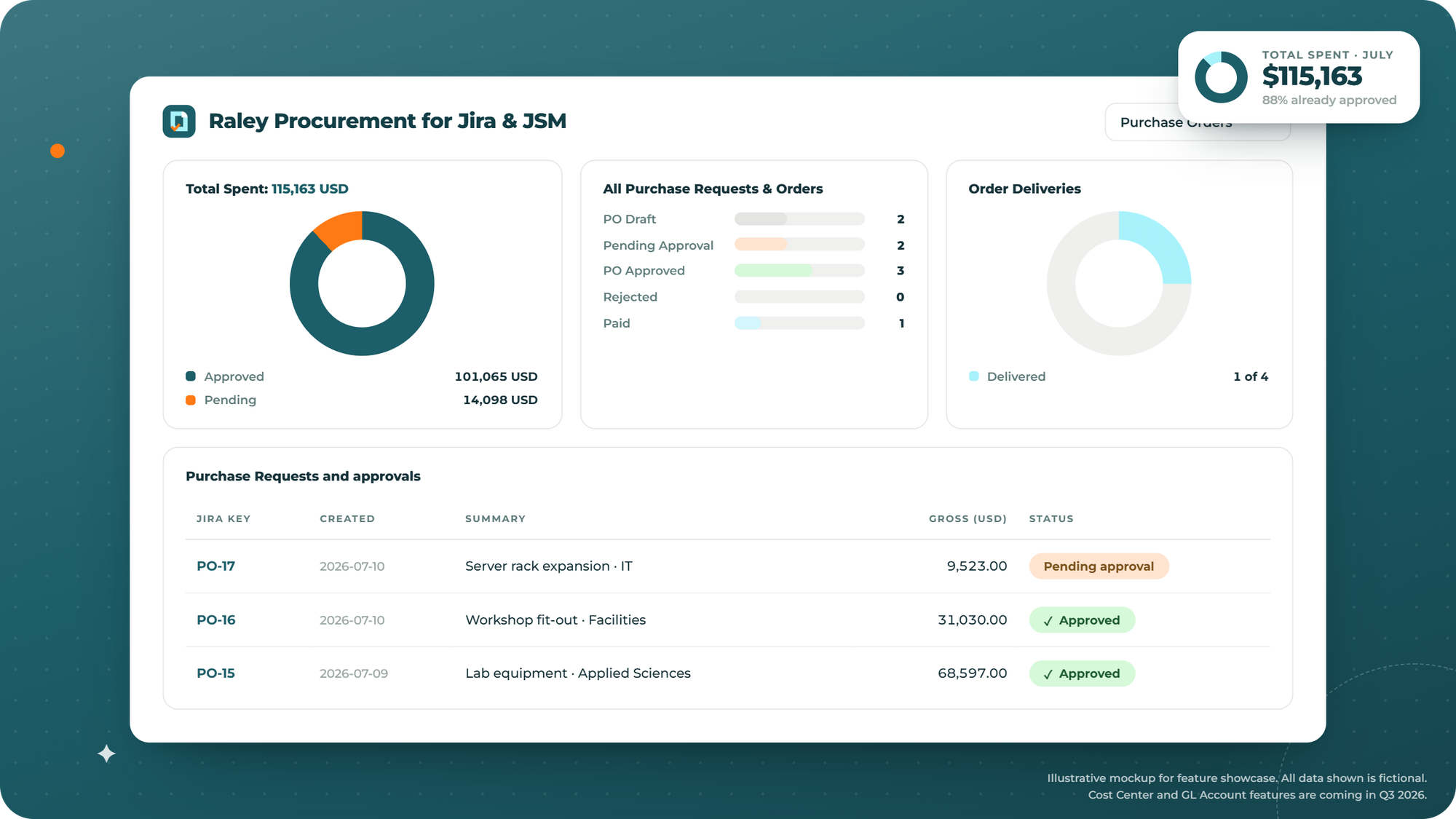
This is where a purpose-built app like Raley Procurement earns its place. It delivers structured purchase requests, vendor management, cost-center / cross-functional approvals, and PO generation on top of JSM out of the box, so you are shaping an intake process rather than assembling one from parts.
How is intake-to-procure different from procure-to-pay (P2P)?
Intake-to-procure is the front of the process: capturing a need, enriching it, routing it, and gathering approvals until the request is well-formed and ready to become a purchase order. Procure-to-pay (P2P) picks up after the PO and runs through receiving, three-way matching, invoicing, and payment. Intake-to-procure is a service-request and orchestration job, which is why it fits Jira Service Management; procure-to-pay is a financial transaction, which is why it belongs in your ERP or AP system.
Should procurement intake live in JSM or in my ERP?
Split it by job. Intake and orchestration (capture, enrichment, routing, approvals, visibility) belong in JSM, because they are service-request problems. The financial transaction (three-way matching, invoicing, payment) belongs in your ERP or AP stack. The point of putting intake in JSM is that the request arrives at the ERP boundary already structured, approved, and traceable.
The bottom line, Do I need an app, or can I build intake in JSM myself?
You can, but why? get the 30days free trials and spend your time doing something you love.
A purpose-built app like Raley Procurement delivers structured purchase requests, vendor management, budget-aware approvals, and PO generation on top of JSM out of the box.
The decision comes down to how complex your intake is and how much Jira configuration time you want to spend.
![Vladimir [RaleyApps]](https://storage.ghost.io/c/54/bc/54bce786-a3c0-4ea3-b0f4-96f64229d4ff/content/images/size/w300/2026/02/Vlad-9-1-1.jpg)