![Vladimir [RaleyApps]](https://storage.ghost.io/c/54/bc/54bce786-a3c0-4ea3-b0f4-96f64229d4ff/content/images/size/w150/2026/02/Vlad-9-1-1.jpg)
Key takeaways
- Purchasing was the one process this team ran outside Jira, and it showed: surprise invoices, duplicate tools, approvals no one could find.
- Moving requests into the JSM portal gave every purchase one place to start and an audit trail that built itself.
- Approvals route by amount and department, so a 200 dollar cable and a 40,000 dollar contract no longer take the same path.
Maria runs finance and ops at a 120-person software company. Every Monday she opened a spreadsheet, three Slack threads, and her inbox to answer one question: what did we agree to buy last week?
Her team ran everything else in Jira and JSM. Purchasing was the one process that had wandered off, and it came back as surprise invoices, two people expensing the same tool, and approvals nobody could find. Here is how a team in that spot moved buying back to where the work already happens, with Raley Procurement for Jira and JSM.
The challenge: spend with no home
The company was growing, and so was its spend: new laptops, contractor invoices, a dozen SaaS renewals a month. The data was fine. Budgets, departments, and vendors were all known. The process around them was not. No single place to raise a request, no agreed path for who signs off, no current record of what had been committed. The spreadsheet was a source of truth, just never a current one.
The old way of approving a purchase
Before Raley Procurement, one purchase took a familiar detour:
- Ask around. Ping a manager on Slack about budget, then guess who else needs to approve.
- Email the sign-off. Approval lived in a reply-all thread finance was sometimes copied on.
- Update the sheet, eventually. A row got added when someone remembered, so the tracker always ran a few days behind.
- Reconcile at month end. Finance pieced it together from invoices after the money was gone.
Every step worked alone. Together they cost Maria an afternoon of detective work every Monday.
The solution: Raley Procurement for Jira and JSM
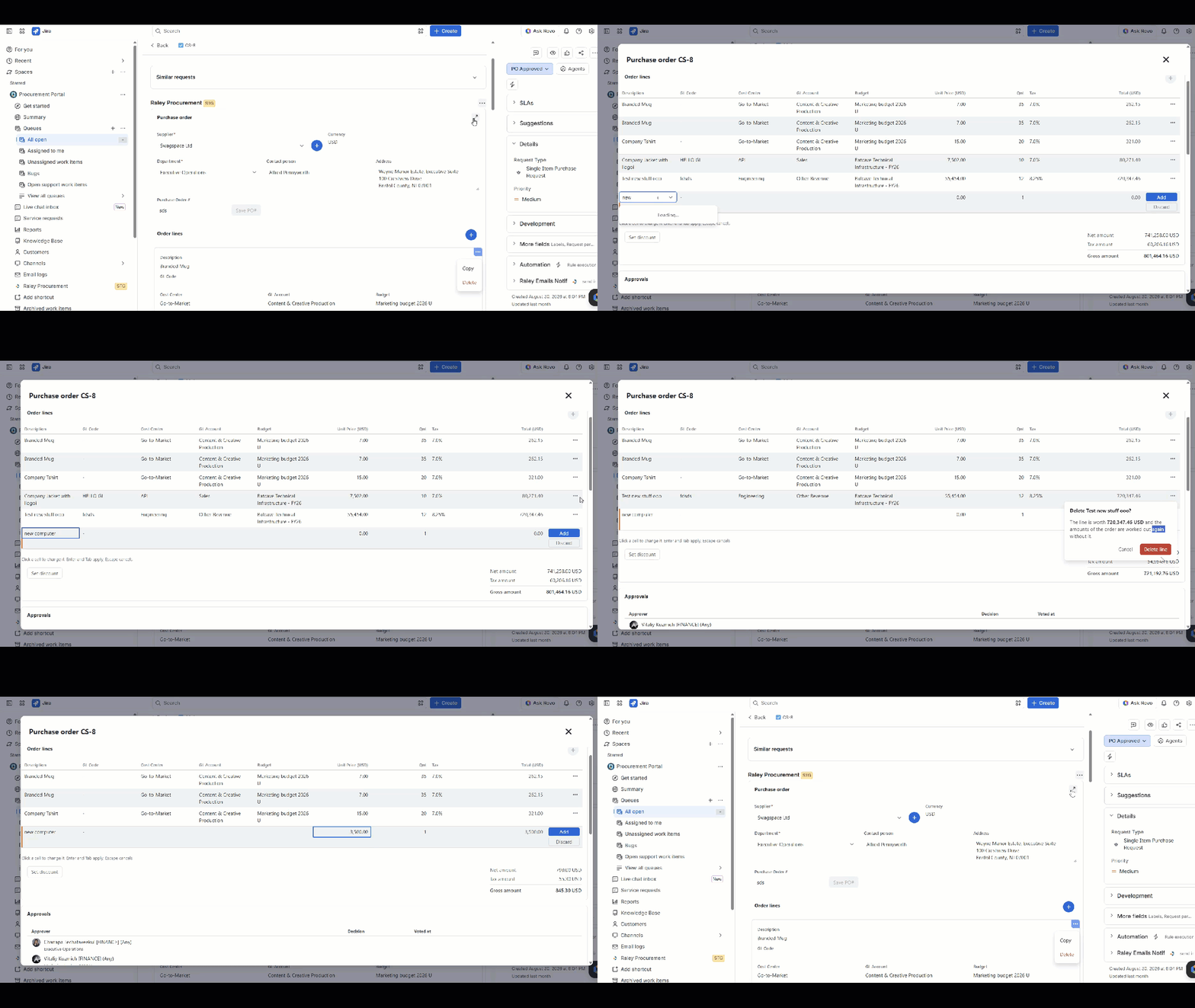
The team installed Raley Procurement and added "Raise a purchase request" to their existing JSM portal. Requests now start where every other request does, and move through an approval workflow the team set up to match how it actually buys. Nothing left Jira, and the audit trail built itself as a request moved from raised to approved to ordered.
What the team turned on
- Requests in the JSM portal. A form in the portal people already use, with a known product and supplier catalog. No new login.
- Routing by rule. Each request goes to the right approver by product, budget, department, and tier, so a 200 dollar cable and a 40,000 dollar contract take different paths.
- Multi-currency. Vendors bill in different currencies, and the app handles it without a side calculation.
- Order tracking from the ticket. Approved requests become orders: what is ordered, what is received, what is still outstanding.
- POs and dashboards. A formatted PDF purchase order for the supplier, plus a live dashboard of committed spend finance can export to CSV.
"A request that used to drift for two or three days across Slack and email now clears the same day, in one system, with a record attached."
The results
Within the first week, the day-to-day changed:
- One place to request and approve. People stopped asking around. They opened the portal, submitted, and the right person was notified.
- Approvals that match the amount. Small buys cleared fast; large commitments got the extra sign-off, because routing ran by rule instead of by memory.
- A current record. The dashboard moved with the requests, so finance stopped rebuilding the month from invoices.
The shift in one view:
| What | Before Raley Procurement | After Raley Procurement |
|---|---|---|
| Where a request starts | Slack message or email | A form in the JSM portal |
| Who approves | Whoever the requester guessed | The right approver, routed by product, budget, department, and tier |
| Record of the decision | A reply-all thread | An audit trail attached to the Jira issue |
| Finance visibility | Reconstructed from invoices at month end | Live dashboard of committed spend |
| Order to the supplier | A forwarded email | A formatted PDF purchase order |
These show the shape of the change, not measured figures from a named customer. The point holds: a request that used to drift for days now clears the same day, with a record attached.
Why keeping it inside Jira and JSM mattered
The real win was not the features. It was that finance and ops got them without running a separate procurement platform. Maria's team already trusted Jira and JSM with its work, so adding purchase orders and approvals there meant no extra tool to administer, no data to sync, and no retraining. The app is Cloud Fortified and Partner Supported, so the tool running the spend meets the same bar as the work going through it.
![Vladimir [RaleyApps]](https://storage.ghost.io/c/54/bc/54bce786-a3c0-4ea3-b0f4-96f64229d4ff/content/images/size/w300/2026/02/Vlad-9-1-1.jpg)